Bangkok Day Tours
I’m Serious Day Tour Man AI, your day trip expert. Ask me anything — where to go, how to get there, and what’s actually worth your day.
Bangkok’s day-trip list includes the most famous staged attraction in Asia and one of its most sobering historical sites, and it pays to know which is which. The floating market on every brochure is a show performed for the cameras — there’s a better, realer alternative that runs on weekends. The bridge from the movie is part of a railway built at a human cost that has to be told straight. Add a ruined imperial capital ninety minutes north, a jungle island in the river’s bend that most visitors never learn exists, and a scam routine around the Grand Palace worth knowing cold before you get anywhere near it.
Distances are manageable — most of these are sixty to ninety minutes out — but the heat is not. Early starts aren’t a preference here; they’re the format.
Here’s what’s worth a day, with real times and honest trade-offs.

Popular Day Trips
Ayutthaya
The Morning Train, Temples by Bicycle
Kanchanaburi
The Death Railway, the Bridge
Floating Markets
The Early Boat, the Train Through the Awnings
Ayutthaya — The Ruined Capital
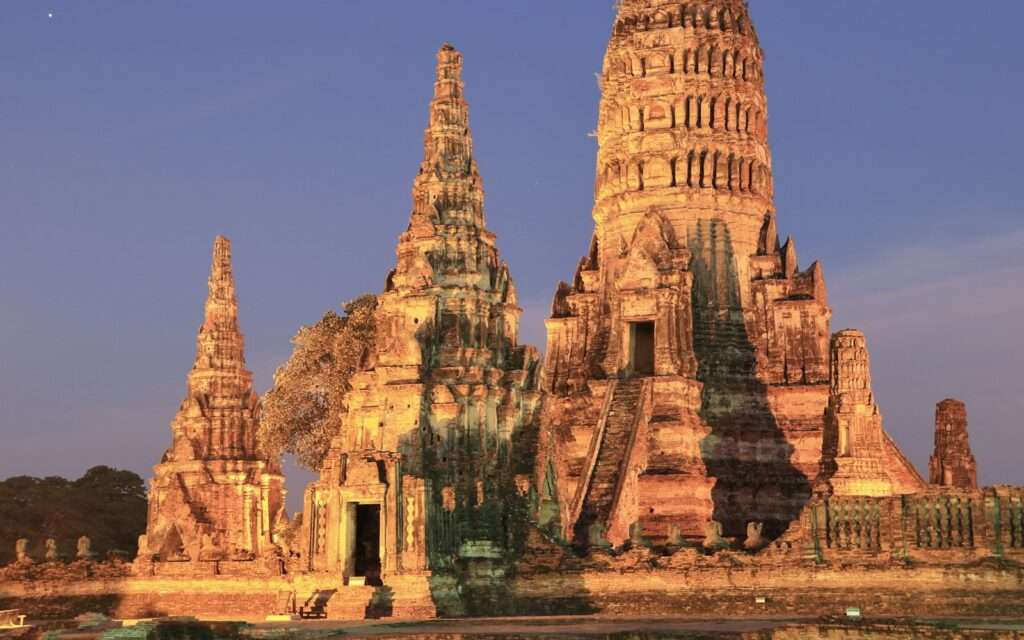
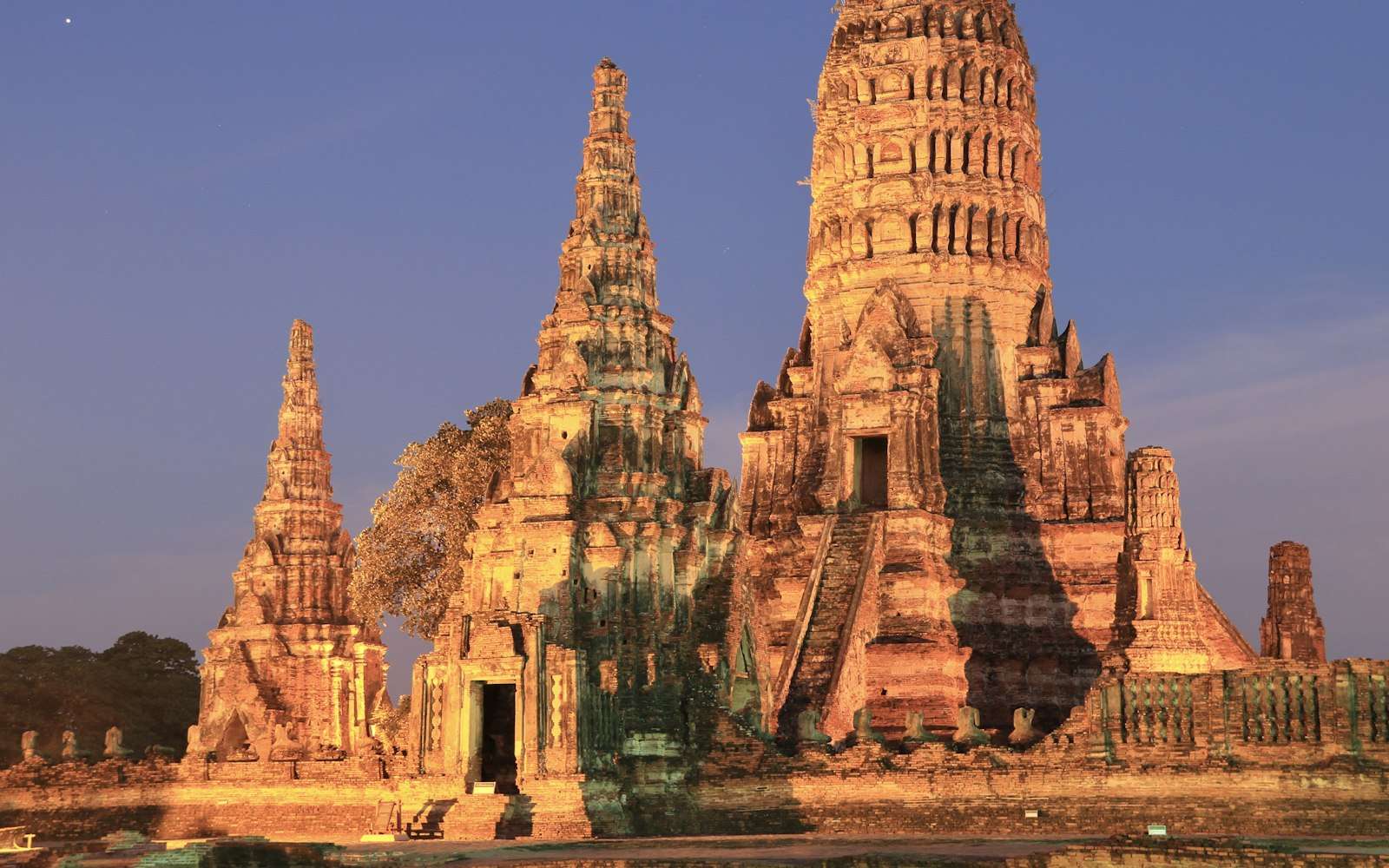
The essential trip, ninety minutes north. Ayutthaya was Siam’s capital for four centuries and among the largest cities on earth before Burmese armies burned it in 1767. The ruins spread across a river island as a UNESCO field of brick prangs, headless Buddhas, and temple platforms, and a structured circuit covers the best of it: Wat Mahathat for the sandstone Buddha head grown into the bodhi tree roots (the icon — photographed crouching, by posted rule, so your head sits below the Buddha’s), Wat Phra Si Sanphet’s three aligned chedis on the old palace ground, Wat Chaiwatthanaram’s Khmer-style silhouette at golden hour, and Wat Lokayasutharam’s reclining giant in the open air.
The logistics are the hard part. The site is spread out and shadeless, and the humidity makes the heat worse. The workable formats: an early start with a hired bicycle or tuk-tuk circuit, or the classic tour combination — coach up in the morning, river cruise back down the Chao Phraya with a long lunch aboard, which is exactly the recovery the day needs. Elephant rides are offered around the ruins; skip them — the welfare record is poor.
Read the full Ayutthaya day-trip page.
The Floating Markets
Damnoen Saduak, the floating market from every brochure, ninety minutes southwest, is a performance. Vendors paddle for the cameras in a canal system that stopped being a working market decades ago, the goods run souvenir-heavy, and the boat-jam photograph everyone wants exists precisely because everyone came for it. As theater, it delivers. As Thailand, it misleads.
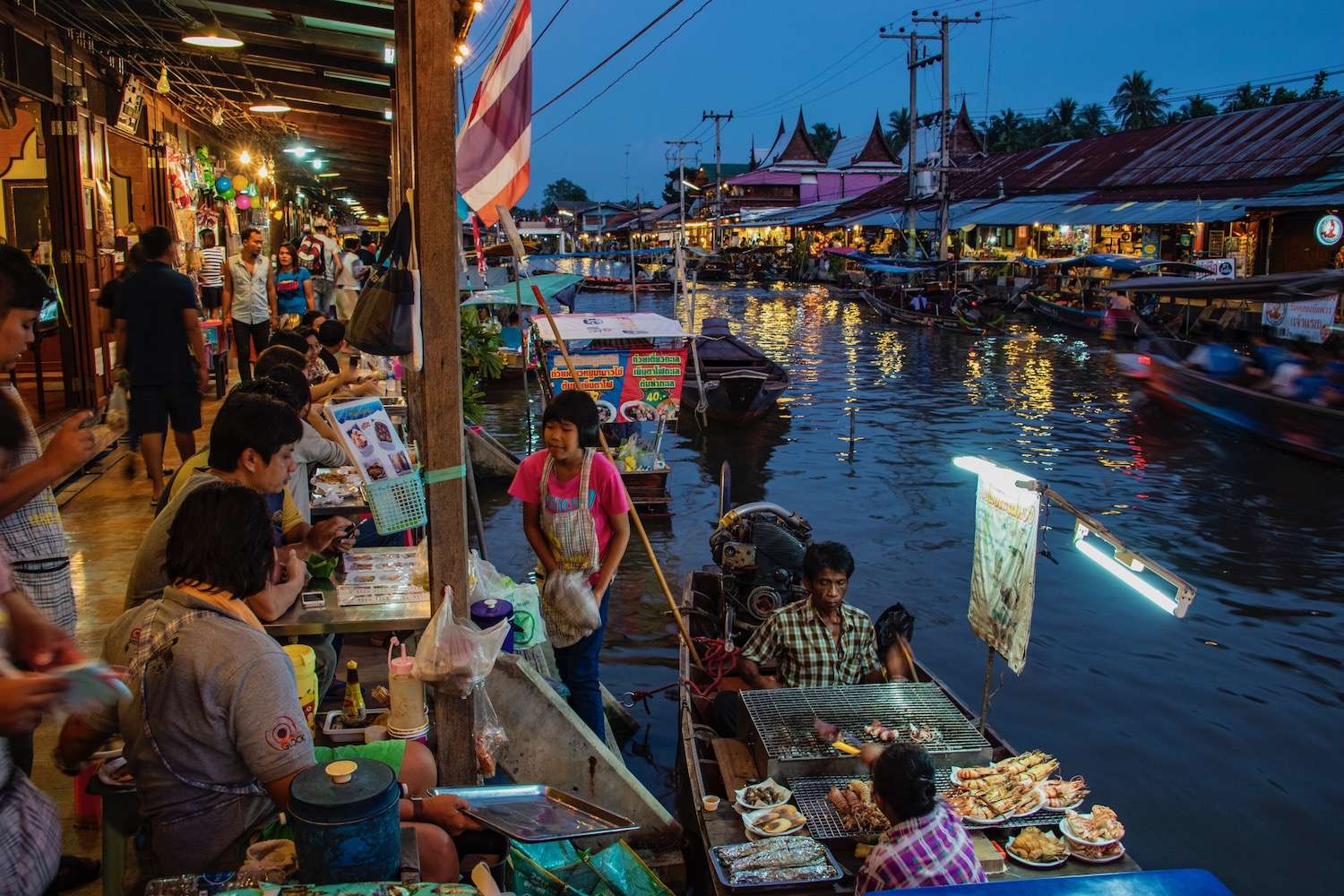
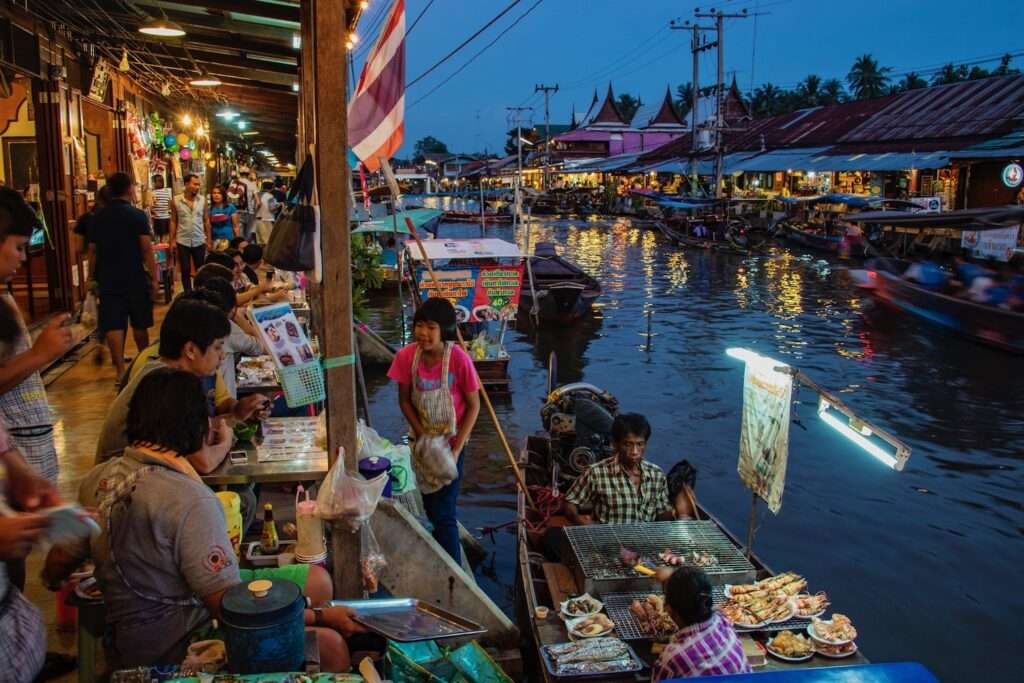
The real alternative is Amphawa, running Friday through Sunday evenings — a canal market Thais themselves attend, with seafood grilled on boats and eaten on the towpath steps, and firefly boat tours after dark to close the night. On the way, stop at Maeklong Railway Market: a produce market laid directly across active train tracks, where vendors fold awnings and baskets back in a choreographed minute as the train rolls through at walking pace, eight times a day. The train schedule dictates the visit — tours time it for you; independent travelers must check it themselves.
The verdict: weekend travelers take Maeklong plus Amphawa and skip Damnoen Saduak without losing anything. Weekday travelers who want the paddle-boat photo can take Damnoen Saduak knowing exactly what it is.
Read the full The Floating Markets day-trip page.
Kanchanaburi — The Death Railway
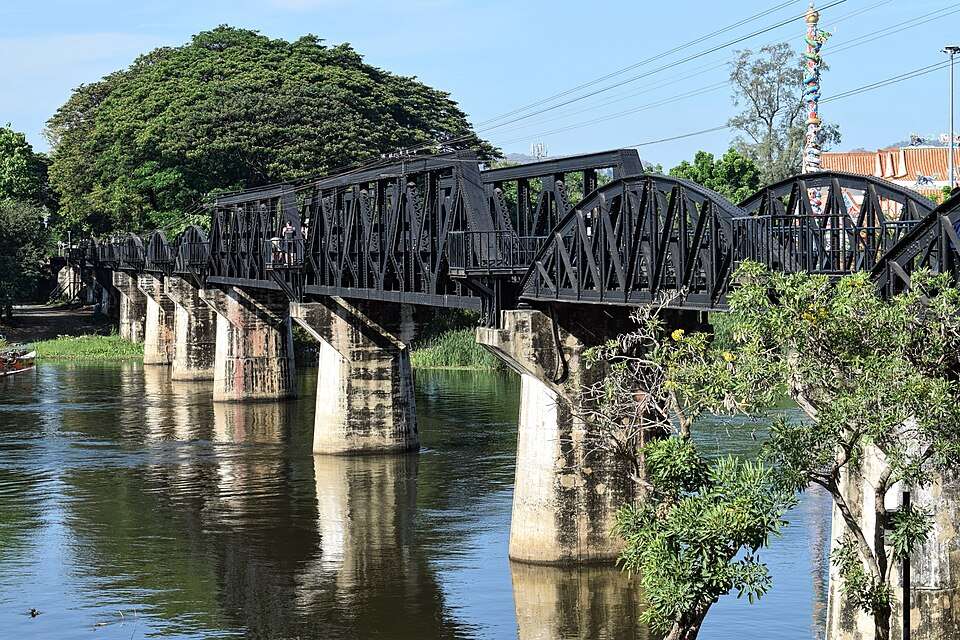
Two to three hours west, and a different kind of day. The Bridge over the River Kwai is real, walkable, and photogenic — and it was built, along with the railway it serves, by Allied prisoners of war and Asian forced laborers under conditions that killed over a hundred thousand people. The movie’s whistled theme sits uneasily on ground this heavy. Build the visit around the story, not the photo.
The essential stops: the Thailand-Burma Railway Centre, the serious museum — start here, because it changes how you see everything after. The Kanchanaburi War Cemetery across the road holds nearly 7,000 graves. Then the bridge itself. For the full day, continue to Hellfire Pass, the cutting POWs carved through solid rock by torchlight, now a memorial walk with an audio guide of survivor testimony — one of the most affecting hours anywhere in Asia.
Two possible add-ons, sorted. Riding a stretch of the surviving railway — the Wang Pho viaduct section clinging to the cliff — fits the day’s theme. Erawan Falls’ seven turquoise tiers are a joyful pairing that many travelers find jarring after the morning’s weight. If the history needs its own day — and it does — split the trips.
Read the full Kanchanaburi day-trip page.
Bang Krachao — The Green Lung
The sleeper hiding in the river’s bend. Bang Krachao is an island formed by a meander of the Chao Phraya directly across from downtown, reachable by a two-minute longtail ferry from the pier at Khlong Toei. It’s a protected, quasi-rural pocket the size of a small district: elevated concrete paths threading through jungle, coconut groves, stilt houses, and the lake pavilions of Sri Nakhon Khuean Khan park — all best covered on the rental bikes waiting at the pier.
The program: two to three hours riding the raised walkways (some sections have no railings; the canal-side stretches keep cyclists paying attention), lunch at the Bang Nam Phueng weekend market — a local market that happens to involve some water, which arguably makes it the most honest floating market of them all — and the Bangkok Tree House café for the skyline-over-jungle view the island exists to serve.
Half a day, minimal cost, and the best possible cure for a week of temple fatigue. It’s the great day almost no one books.
The Ancient City — Siam in Miniature
An hour southeast, Muang Boran — the Ancient City — claims to be the world’s largest open-air museum, and plausibly is: a 320-hectare park shaped like Thailand itself, with over a hundred monuments placed roughly in their real geographic positions. Some are relocated originals, some are replicas — including reconstructions of buildings that no longer exist anywhere, like Ayutthaya’s Sanphet Prasat palace. That’s the intellectual case for the visit: it shows you what the ruins up north looked like whole.
Be clear about what it is: a constructed experience, closer to a scholarly theme park than a historic site — and it works well on exactly those terms. Bicycles and golf carts come with entry, the floating market section is staffed by actual vendors, and photographers get the temple shots that crowds at the real sites never allow. Architecture-curious travelers and families tend to rate it a top-tier day; purists should route to Ayutthaya instead and will lose nothing but the reconstructions. The Erawan Museum’s giant three-headed elephant pairs well en route.
The Grand Palace, the Scams & Bangkok Itself
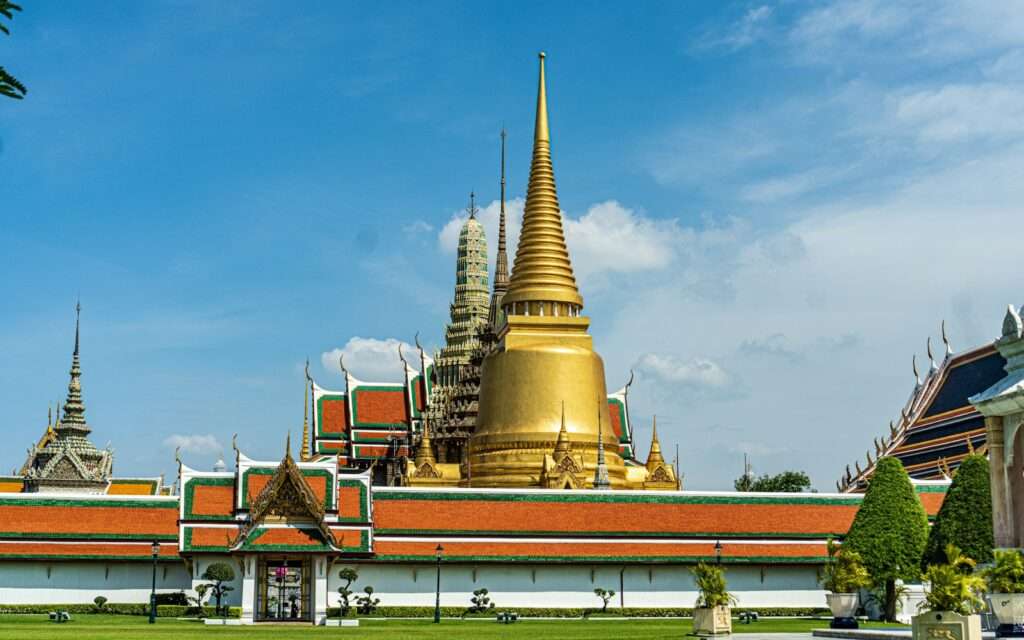
Defense first. The Grand Palace is the target of Southeast Asia’s most polished scam routine: friendly regulars working the approach radius explain that the palace is “closed today” (it isn’t) and offer a tuk-tuk tour that ends at a gem shop. The counter-rule is absolute — ignore anyone volunteering closure information and walk to the ticket gate, where the real hours are posted. Actual closures happen only for royal ceremonies and are announced on the palace’s official site.
Inside, the Emerald Buddha and the ramparts of gilded spires justify every visitor. The dress code is strictly enforced — covered shoulders and knees, with rentals at the gate for the forgetful — and mornings beat both the heat and the crowds. Wat Pho next door holds the 46-meter reclining Buddha and the massage school that trains the country; the on-site treatment is the one you’ve earned. Wat Arun across the river completes the royal triangle — climb it late afternoon, photograph it at dusk from the opposite bank.
For the rest of the city: street food is the crown — Chinatown’s Yaowarat after dark, the Michelin-starred stall tier (Jay Fai’s crab omelette and its queue are their own attraction), and the rule that turnover, not decor, marks the safe cart. Chatuchak weekend market runs 15,000 stalls; go early and accept getting lost as the format. Longtail rides through Thonburi’s khlongs show the canal city the streets hide. Rooftop bars at dusk are a Bangkok ritual, with the caveat that dress codes and drink prices scale with altitude. On transport: tuk-tuks are theater priced accordingly — agree on fares first, always — the river express boats are the scenic bargain, and the BTS and MRT beat traffic that has to be seen to be believed. Season math: November through February is the cool, dry window and the standing recommendation; April is the hottest month, with Songkran’s water war as compensation; the monsoon months run on afternoon-storm rhythms rather than washouts.
Frequently Asked Questions
Is Ayutthaya worth a day trip from Bangkok?
Essential — the ruined four-century capital, 90 minutes north, best done as an early bicycle or tuk-tuk circuit with the river-cruise return. Shadeless and spread out: hat, water, morning start.
Which floating market should you visit?
Amphawa (Friday–Sunday evenings) for the market Thais actually attend, combined with the Maeklong Railway Market’s train-through-the-stalls spectacle. Damnoen Saduak is staged for cameras — visitable knowingly, skippable without loss.
What is the Death Railway?
The WWII railway to Burma built by Allied POWs and forced laborers at catastrophic human cost. Visit via the Kanchanaburi museums, the war cemetery, the bridge, and Hellfire Pass’s survivor-testimony walk. Give it the seriousness it requires, and ideally the full day.
What is Bang Krachao?
Bangkok’s “green lung” — a jungle-and-canal island across the river, reached by a two-minute ferry and covered by rental bike on raised paths. The best half day almost no visitor takes.
How do you avoid the Grand Palace scam?
Anyone near the palace volunteering that it’s “closed today” is running the gem-shop tuk-tuk script. Ignore them and walk to the ticket gate — real closures are rare and announced on the palace’s official site. The dress code is real and enforced; mornings beat heat and crowds.