The Floating Markets from Bangkok
Damnoen Saduak is a show now, and it knows it — go early, expect to be sold to, and it’s still the photograph. Pair it with Maeklong, where a market folds itself out of a train’s way several times a day.
The short version
- Damnoen Saduak sits about 100 km southwest — 1.5–2 hours by tour van or the Southern Terminal minivans — with the market’s genuine hours running roughly 7 to 11; by noon it’s vendors photographing each other.
- The paddle-boat ride through the canals is the format: prices are haggled by boat and hour (agree before boarding, confirm what’s included), and the coconut-pancake and boat-noodle vendors trade gunwale-to-gunwale as the working theater the alarm licensed.
- The market’s history is real — the canal network is King Rama IV-era engineering and the floating trade predates the tour buses by a century — which is why the show, staged or not, photographs like the past.
- Maeklong Railway Market runs its produce stalls directly on active tracks: several times daily a train eases through at walking pace while awnings fold and baskets slide back in a choreographed thirty seconds — passing times shift with the timetable, hence the alarm’s verify-first rule; the state railway’s information sits at railway.co.th.
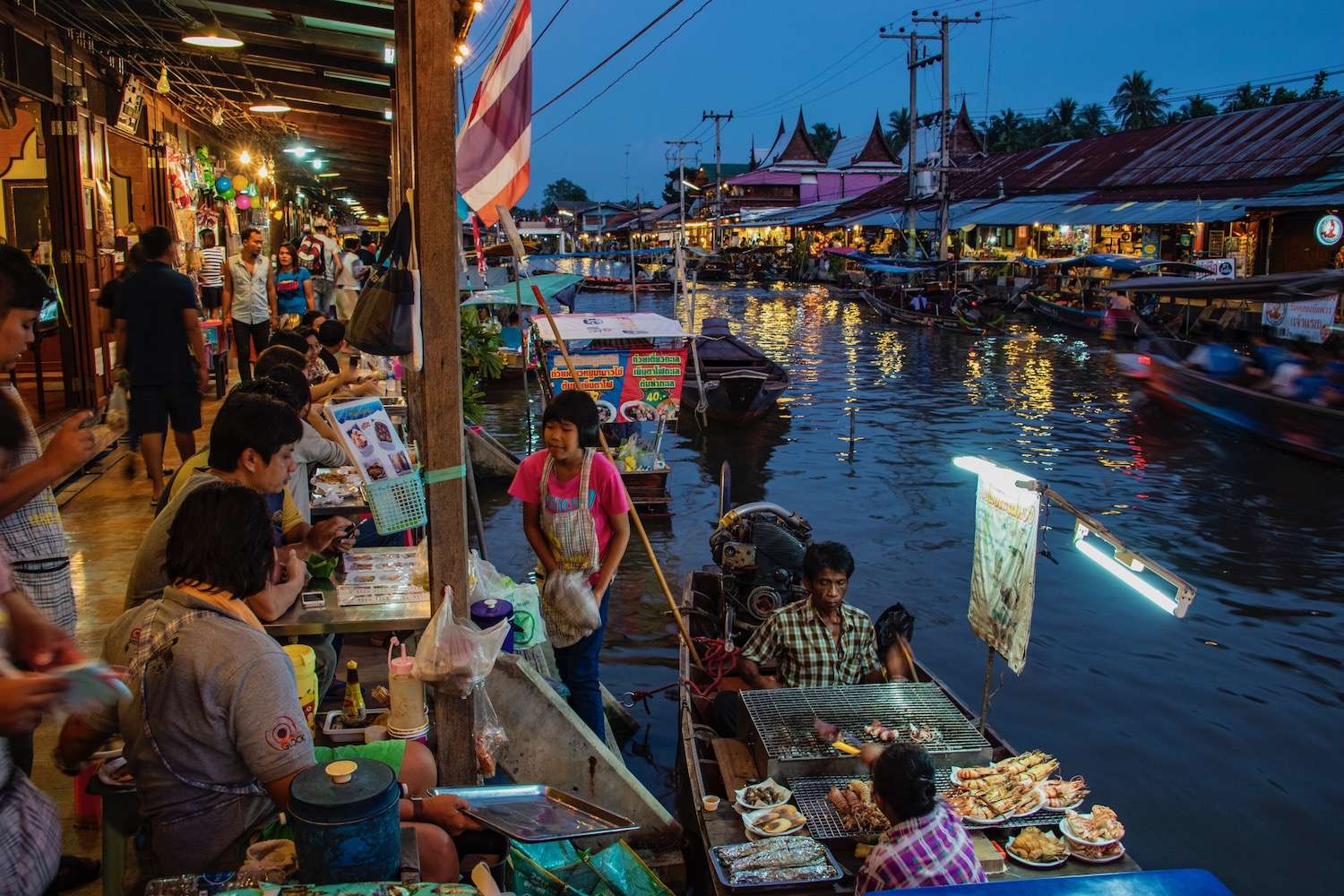
- Amphawa floating market — the locals’ evening alternative — runs weekends from mid-afternoon with boat-grilled seafood and firefly boat tours after dark: the atmospheric counter-program for travelers whose schedule bends that way.
- Bundled tours run both markets in a half-day loop at prices DIY struggles to beat; the independent version exists via minivans for travelers who want the markets at their own pace and earliest hours.

Getting there
The tour math is unusually honest here: hotel pickup, both markets, and the timing coordination for the train’s passing, at a price the minivan-plus-songthaew assembly barely undercuts — the alarm’s pride line is the working conclusion. The DIY route (Southern Terminal minivans to each town, local connections between) buys you the 7am market before the tour waves and costs the convenience; it’s the photographer’s version. Either way, the train times at Maeklong anchor the schedule — miss the passing and the market is just a market with unusually low awnings.
The day
Damnoen Saduak first and early: negotiate the paddle boat as the alarm briefed — rate, duration, route agreed at the dock — then let the canal do its business: fruit pyramids, wok boats, the mango-sticky-rice hand-off executed mid-current, and the souvenir gauntlet run with good humor and a firm no-thank-you. An hour aboard plus the bankside lanes covers it. Then Maeklong for the main event’s thirty seconds: position along the tracks with the vendors’ guidance (they know the safe margins to the centimeter), watch the awnings accordion back, and let the train ease past close enough to read its rivets — the market reassembles behind it before the last car clears, which is the real show. Lunch on boat noodles or the seafood shacks, and the return van lands Bangkok by mid-afternoon; the Amphawa variant swaps the whole structure for a weekend evening of grilled prawns and fireflies instead.
When to go
November through February runs the cool-season version of an early-morning format that works year-round — the markets themselves are weatherproof by canopy and canal. Weekends swell Damnoen Saduak’s tour volume and open Amphawa’s evening alternative; weekdays hand the canals to the earliest boats. The rainy season (roughly May–October) adds afternoon downpours the morning schedule already dodges. The train’s timetable is the one variable that outranks weather — the alarm’s verification rule is the entire logistics.
Frequently Asked Questions
Is Damnoen Saduak too touristy to bother with?
It’s the most touristy market in Thailand and the most photographed for the same reason — the alarm’s framing is the answer: go early, take it as theater with genuine history under the greasepaint, and the pictures justify the trip. Travelers allergic to being sold to should choose Amphawa’s evening instead.
How much should the paddle boat cost?
Rates swing by season, duration, and haggling stamina — agree the total before boarding, confirm it covers the full loop rather than a teaser, and treat mid-ride upsells as scenery. Sharing a boat splits the theater’s ticket price; the coconut pancakes are bought separately and correctly.
Is the Maeklong train actually safe to watch?
The choreography has run for decades with the vendors as its safety marshals — stand where they put you, keep bags and toes behind the line they indicate, and the walking-pace train passes with margin measured in handspans but managed with complete routine. Selfie-stick overreach is the one genuine hazard.
What about Amphawa versus these two?
Amphawa is the local-leaning evening market — weekends only, seafood-forward, prettiest after dark with the firefly boats. It replaces rather than extends the morning circuit. Photographers wanting daylight canals stay with Damnoen Saduak; atmosphere-hunters with a free Saturday evening switch.
Can I combine this with Kanchanaburi?
Geographically they share the region west of Bangkok, and long tour days exist — but Kanchanaburi (documented on this network) carries a memorial register that calls for its own unhurried day, not a market morning’s leftovers. The honest answer is two trips.